



We Played Thousands of Plinko Drops and Tested Every Strategy — Here's What Actually Works
Full disclosure: we have had sessions where we ignored every principle in this guide and watched a bankroll evaporate faster than expected. We have also had sessions that ran smoothly, produced good returns, and ended when we chose to end them — not when the funds ran out. The difference, in almost every case, came down to one thing: whether we had a plan before the first ball dropped, or whether we were making it up as we went. Plinko is a game of chance. No strategy changes the long-term house edge — the 1% edge built into BGaming's Plinko XY at 99% RTP applies whether we drop 100 balls or 10,000. What strategy does is shape how those sessions unfold. This guide is what we wish someone had told us before we started. 18+ only. We play responsibly and encourage the same. No strategy guarantees winnings. Gambling Help Online: 1800 858 858. T&Cs apply.
The First Lesson: Every Drop Is Independent
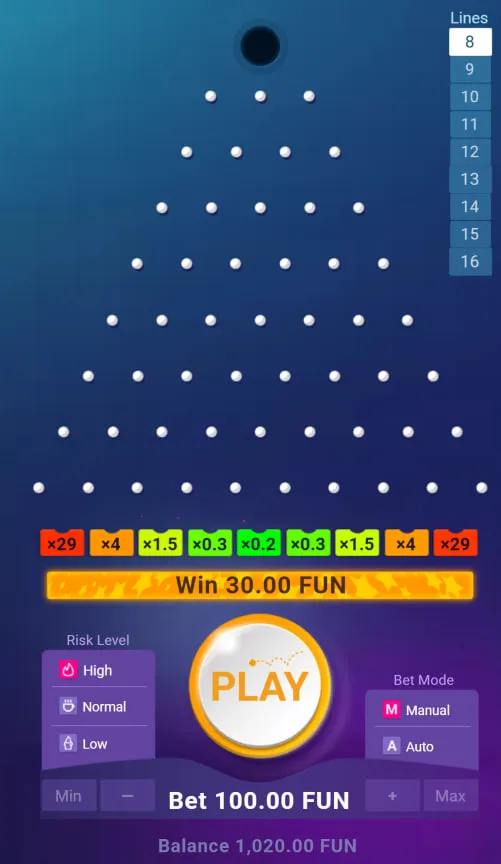
When we started, we tracked outcomes, watched for patterns, and convinced ourselves a high-multiplier slot was ""due"" after a run of low results. This thinking is understandable and completely wrong. BGaming's Provably Fair algorithm commits the encrypted outcome of each drop before the ball falls — the system has already ""decided"" the result before we see it, and that result has no relationship to the previous one.
Once we accepted this, strategy became clearer. We stopped trying to predict individual outcomes and focused on what we could actually control: risk level, row count, bet size, and stop-loss settings.
The Configuration Decision That Changed Our Play
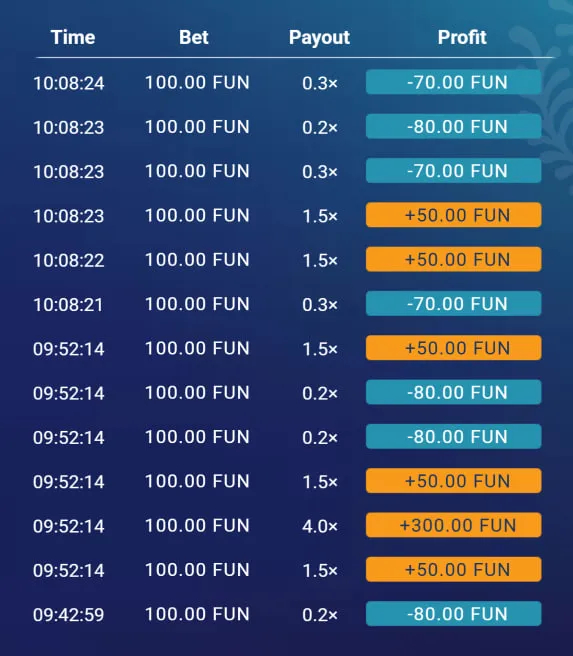
We spent a lot of time at different settings before finding what we actually liked. Here's the full data from BGaming's implementation:
| Row Count | Low Risk Range | Medium Risk Range | High Risk Range |
|---|---|---|---|
| 8 | 0.5× – 5.6× | 0.4× – 13× | 0.2× – 29× |
| 10 | 0.5× – 8.9× | 0.4× – 22× | 0.2× – 76× |
| 12 | 0.5× – 10× | 0.3× – 33× | 0.2× – 170× |
| 14 | 0.5× – 7.1× | 0.2× – 58× | 0.2× – 420× |
| 16 | 0.5× – 16× | 0.3× – 110× | 0.2× – 1,000× |
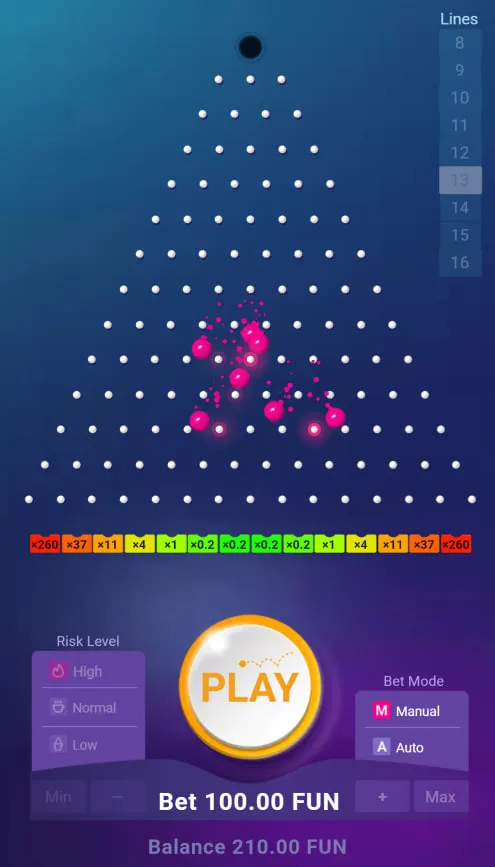
After significant testing: Medium risk at 12 rows is where we spend most of our time. The 33× ceiling is exciting without being unreachable, the middle slots hit with enough regularity to keep sessions alive, and the variance is manageable with a A$100–A$200 session bankroll. High Risk 16 rows has produced some of our most memorable drops — but it has also ended sessions in about a third of the time we expected. We only go there with a larger bankroll specifically allocated for it.
Three Player Profiles from Our Testing
- New players / smaller bankrolls (under A$100): Low risk, 8–10 rows. We ran 50-drop sessions at Low Risk 8 rows on A$50 bankrolls — they lasted the full session more often than not, which is exactly the experience worth having when getting started.
- Regular players (A$100–A$300): Medium risk, 12 rows. Our default. We've logged more drops here than anywhere else.
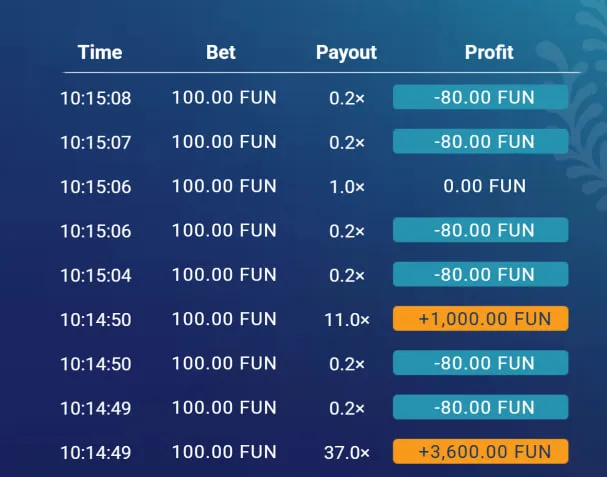
- High-roller sessions (A$500+): High risk, 14–16 rows with strict stop-loss. The 1,000× multiplier is achievable here — we've seen it. We've also burned through testing budgets faster than planned. The two coexist.
The Four Strategies We Actually Tested
| Strategy | What It Does | Our Experience | Verdict |
|---|---|---|---|
| Fixed Bet | Same stake every drop | Most predictable. Boring in the best way. | Recommended for most players |
| Anti-Martingale | Increase after wins; reduce after losses | Best during winning runs; protects during bad stretches | Recommended with a ceiling set |
| Martingale | Double after every loss; reset after win | We tried it. We don't recommend it. | Not recommended |
| D'Alembert | +1 unit after loss; -1 after win | More stable than Martingale; slower recovery | Moderate — suits conservative players |
Our Martingale Confession
We ran a Martingale session at High Risk 16 rows starting at A$2. By drop 7 of a losing run, we were betting A$256. We stopped there — but if we'd continued one more losing drop, the next bet would have been A$512. From A$2. On a session we intended to run for an hour. The math is simple: at High Risk 16 rows, sub-1× outcomes are common. A starting bet of A$2 requires A$512 by round 8. We tested it so players reading this don't have to.
How We Set Up Autobet — The Exact Process
We configure autobet before every single session, without exception. Here's our standard A$100 session setup:
- Risk: Medium. Rows: 12. Start here. Change only with deliberate reason.
- Bet size: A$2. That's 2% of A$100 — enough for 50+ drops before depletion.
- Stop-loss: A$70 remaining. If the balance hits A$70, the session stops automatically. We don't override this.
- Stop-win: A$150. If we reach A$150, we exit with the profit. Not every session ends this way — but when it does, we actually take the winnings.
- Drops: 50. After 50 drops we review. Most sessions either continue with the same settings or end here.
- Start autobet. Don't touch it. The discipline is leaving the settings in place. Every time we've broken this rule, we've regretted it.
The Maximum Multiplier Question — What 1,000× Actually Takes
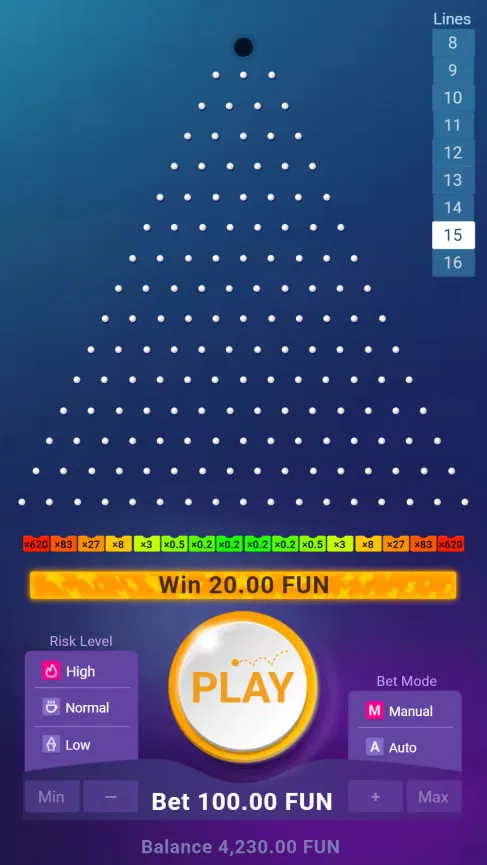
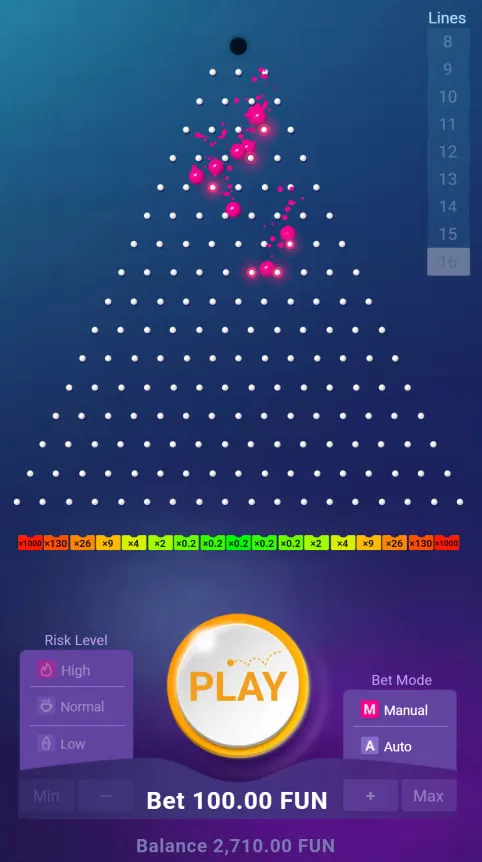
We've seen the 1,000× multiplier at High Risk 16 rows — not in our own sessions, but watching live at Joe Fortune. We've seen sub-100× results that generated meaningful winnings too. The reality of chasing 1,000×:
- It requires High Risk + 16 rows — the highest volatility configuration available
- The ball must land in the extreme edge slots, which requires continuous edge-direction deflections at every peg
- Most drops at this configuration return less than the original bet
- A session long enough to realistically encounter this outcome requires a substantial bankroll to absorb extended losing sequences first
- Easter Plinko (BGaming, RTP 98.91–99.16%) gives the best probability-to-RTP ratio for this ceiling
Our approach: we don't specifically chase 1,000×. We play High Risk 16 rows when we have the bankroll for it, set the stop-loss, and enjoy the ride — which sometimes ends at sub-1× and occasionally ends somewhere remarkable.
The Casinos Where We Apply This
The strategy above works best at casinos carrying BGaming's Plinko with full autobet functionality and RTP transparency:
- Joe Fortune — 9 Plinko variants tested. A$5,000 + 450 FS welcome. Note the 50× wagering requirement before claiming a bonus with Plinko play.
- Neospin — BGaming Plinko XY (99% RTP) confirmed. A$10,000 + 100 FS (code NEO100). Daily cashback 10–20% — we track this through the app.
- SkyCrown — 7,000+ games. A$8,000 + 400 FS. The 20 FS no-deposit offer on signup is genuine.
- Wazamba — 15% weekly cashback up to A$4,500. We confirmed Plinko contributes 10% to bonus wagering here — factor this in before claiming a bonus.
- Gamblezen — 60 FS no-deposit with code 60FSZEN (we confirmed this works). A$50 max cashout on the NDB, 40× wagering.
18+ | T&Cs apply | Gamble responsibly
What We Learned About When to Stop
The stop-loss setting in autobet exists because we cannot always trust our own judgement when a session is going badly. Setting the limit before starting removes the decision from the emotional moment when the balance is dropping. The same applies to win targets: we've watched sessions where we were at A$150 profit, felt invincible, kept playing, and ended at A$90. Taking the win target seriously is harder than setting it — but it is the difference between a profitable session and a breakeven one.
Plinko is entertainment. It costs money, like any entertainment. The strategy that matters most is the one that keeps it enjoyable rather than stressful. If it stops being enjoyable, it's time to stop.
- Gambling Help Online: 1800 858 858 (free, 24/7, confidential)
- gamblinghelponline.org.au
- BetStop self-exclusion: betstop.com.au